

In commercial real estate, the numbers can look perfect on paper—strong rent roll, solid cap rate, and a “light value-add” story that pencils out. But here’s the hard truth: the building is the deal. If the physical asset has hidden defects, deferred maintenance, or compliance issues, your projected returns can evaporate fast—sometimes in the first 90 days after closing.
A commercial building inspection led (or supported) by engineers isn’t just a checkbox for due diligence. For property investors, it’s a financial viability test—a way to validate whether the property can actually produce the NOI, cash flow, and exit value your pro forma promises.
Below is how inspections protect your investment—specifically through the lens of profitability, risk, and leverage—and why investors who skip them often learn the lesson the expensive way.
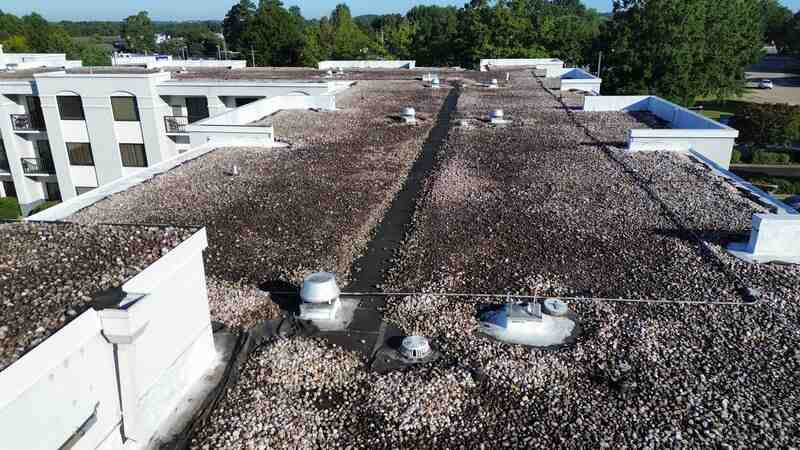
1) Your pro forma is only as accurate as the building’s real condition
Most investor underwriting assumes a few things:
- Systems have reasonable remaining useful life (RUL)
- Major components won’t fail unexpectedly
- Deferred maintenance is minor and manageable
- Code and safety compliance won’t trigger major upgrades
A thorough commercial inspection evaluates what’s actually happening in the big cost drivers—structure, envelope, roof, MEP systems, moisture intrusion, life safety, and compliance—so you can adjust your underwriting before you’re committed.
If you buy based on assumptions and discover reality later, your “stable 7-cap” can quickly become a capital-intensive headache.
2) Inspections convert unknowns into negotiation leverage
One of the highest ROI moments in any acquisition is before closing, when you still have leverage.
Inspection findings can justify:
- Purchase price reductions
- Seller credits
- Escrow holdbacks
- Seller-funded repairs
- Deal structure changes (e.g., longer DD, repair addenda, or revised contingencies)
That’s not theory—it’s exactly why inspections are considered a negotiation tool: they create defensible documentation for adjusting the deal based on real conditions.
One example cited in an inspection guide describes a buyer who used inspection findings to negotiate a major price reduction and seller-funded repairs—turning a relatively small inspection fee into outsized savings.
Even if your market is competitive, documented defects beat opinions every time.
3) Protect NOI by catching “silent killers” before they hit cash flow
Some building issues don’t show up as dramatic failures—until they start bleeding NOI month after month. Inspections help you spot these early:
Moisture intrusion & envelope failures
Moisture can quietly degrade structural elements, insulation performance, interior finishes, and indoor air quality—often triggering repeated repairs and tenant complaints.
HVAC and electrical capacity problems
If HVAC is undersized, near end-of-life, or inefficient, you’ll see it in operating costs, comfort complaints, and replacement timing. Electrical issues can create safety concerns, code problems, and costly upgrades—especially during tenant improvements.
Roof and drainage risks
A roof “with life left” can still become a major expense if flashing, drainage, or substrate issues are missed. Inspections typically evaluate roof surfaces, flashing, and drainage conditions as part of the envelope review.
These are the issues that turn “light maintenance” into unplanned capital, and unplanned capital is where returns go to die.
4) Forecast CapEx accurately (and stop guessing at reserves)
Investors don’t lose money because buildings need maintenance. They lose money because they didn’t budget correctly.
A strong inspection report doesn’t just list defects—it helps prioritize them and often includes repair recommendations, cost awareness, and remaining useful life projections for major systems.
That feeds directly into:
- CapEx schedule (Year 1 / Year 2 / Year 5)
- Reserve planning
- Refinance timing
- Hold vs. sell decisions
- Whether your projected cash-on-cash is real
If you’re underwriting a deal and hoping the building behaves, you’re not investing—you’re gambling.
5) Avoid compliance surprises that create expensive forced upgrades
Commercial properties aren’t just physical assets; they’re regulated environments.
Inspections that consider legal/regulatory compliance can flag issues tied to:
- Fire safety and emergency egress
- Accessibility (ADA)
- Environmental concerns (asbestos, lead, mold/moisture)
- Local code and zoning requirements
Why does this matter financially?
Because non-compliance can mean fines, legal exposure, restricted use, or forced renovations—and those costs rarely appear in a seller’s marketing package.
6) Lenders and insurers care about the same risks you should
Many lenders require inspections as part of financing, and insurers price risk based on the asset’s condition and loss exposure.
A well-documented inspection supports:
- Smoother underwriting
- Fewer last-minute conditions
- Better risk conversations with insurers
- A more defensible valuation narrative (especially if issues were addressed)
A “clean bill of health” can improve how the property is perceived by lenders, insurers, and future buyers—directly influencing financing terms and exit value.
7) “How much does an inspection cost?” The better question is “What’s the cost of being wrong?”
Commercial inspection costs vary by size and complexity. One guide cites pricing often based on square footage and scope, with ranges commonly around $1,500 to $15,000+ depending on the property.
For investors, that cost should be viewed as:
- A hedge against unforeseen repairs
- A tool for negotiation leverage
- A CapEx planning input for your pro forma
- A risk-reduction step that protects NOI and exit value
If you’re investing millions, spending a fraction of a percent to verify the asset is usually one of the best ROI decisions you can make.
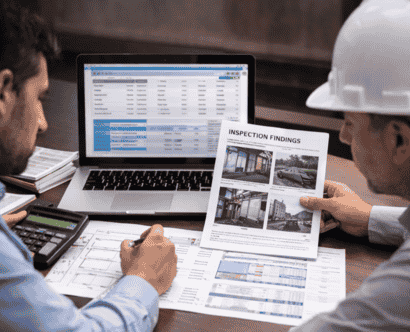
What engineer-led inspections typically evaluate (the money areas)
A comprehensive inspection commonly reviews:
- Structural components: foundation, framing, load-bearing elements, signs of settling/cracking
- Building envelope: walls, windows/doors, waterproofing, roof covering, flashing, drainage
- MEP systems: HVAC condition/capacity/efficiency, electrical service and distribution, plumbing
- Fire/life safety: sprinklers, alarms, emergency systems
- Moisture/environmental concerns: water intrusion, mold indicators, hazardous materials indicators (as applicable)
- Code and accessibility: general compliance considerations including ADA
For investors, these aren’t “building details.” They’re profit drivers—because every one of these categories can trigger major CapEx or legal risk if missed.
A smarter way to invest: inspect like an owner, not a hopeful buyer
If you’re buying commercial property—especially value-add, older inventory, or anything with unknown maintenance history—your inspection isn’t a formality. It’s the moment you answer:
Is this building financially viable at the price and terms being offered?
If you want an inspection that’s built around investor decision-making—verify the numbers, forecast CapEx, reduce downside risk, and strengthen negotiation leverage—call Southeast Engineering & Development Group LLC to schedule a commercial building inspection and talk through your deal.
Commercial Service Request Form
"*" indicates required fields